You Wrote a First Draft. Now What? Enter the Developmental Editor

Updated: 5 days ago
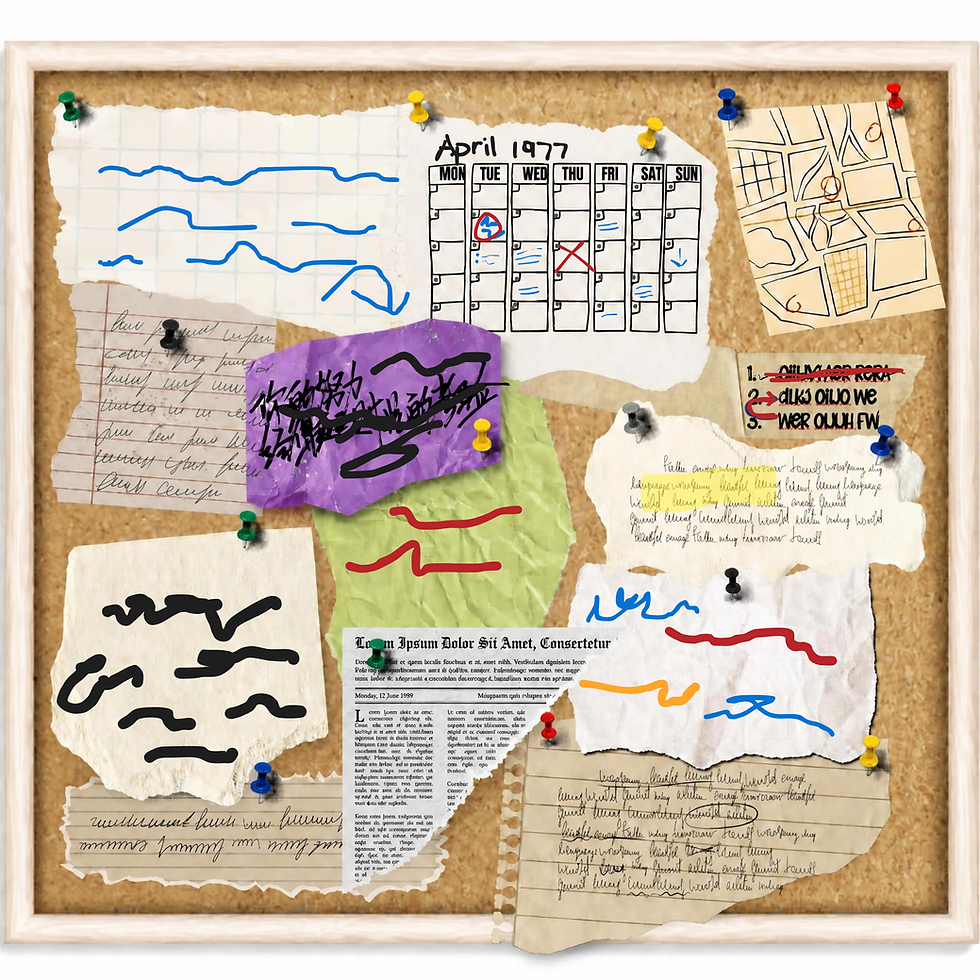
Developmental editing is like looking at your entire manuscript on a giant corkboard so you can see how it all fits together. You can easily rearrange pieces of paper, draw connecting lines between linked elements, make sure your timeline is consistent, or tear something off if it isn't working.
A developmental editor, aka structural or substantive editor, addresses the big picture, usually at an early draft stage. Depending on the needs of the project, they may evaluate—among other elements—whether
the material is organized in a way that engages the reader and allows them to follow the narrative, building on previous information;
the pacing keeps the action moving forward and not stagnating;
the character development, motivation, and story arc are convincing; and
the final product will be marketable to its target audience.
“Developmental editing is typically undertaken by the editor who acquires the work for the publisher but may instead be handled by the author’s agent or by a separate editor hired to do the work. Since it may involve total rewriting or reorganization of a work, developmental editing is always done (if needed) before copyediting begins” (The Chicago Manual of Style, 18th edition, § 2.53).
Fiction developmental editing
Fiction developmental editing is a highly specialized skill. A lot of fiction developmental editors come from a traditional or indie publishing house background, with multiple published books under their belts. Years of experience have taught them
what resonates with readers—and what doesn’t;
how to tweak the text for maximum marketability; and
how to work long-term with authors to bring their manuscripts to bookstore shelves, whether brick-and-mortar or online.
This type of developmental editor works with you to elevate your manuscript, sometimes from the outline stage. It can be a long, collaborative process.
Another valuable service is provided by developmental editors who function more like beta readers but from an editorial perspective. This editor provides a lot of detailed feedback (sometimes more than a dozen pages) so that you, as the writer, can edit your manuscript yourself.
So it’s important to understand that the definition of “developmental editing” may vary from editor to editor. You know what you’re looking for when you seek out a developmental editor, so vet your potential developmental editors carefully to ensure your expectations align.
I am not a fiction developmental editor.
My focus in fiction is line editing and copyediting rather than reshaping stories from the ground up.
We both want your readers to stay engaged and keep moving forward, not get distracted by plot holes, logical gaps, slow pacing, or inconsistencies in small narrative points (was the book in her hand when she entered the room, or did she pull it off the bookshelf after she saw the dead body?), character traits, setting descriptions, or geography.
If I see issues with your manuscript as I edit, I will bring them to your attention with a query or a suggested revision and leave the ball in your court. Rewriting (or accepting/rejecting my changes) is up to you.
But if your manuscript is nonfiction . . .
I have a special affinity for nonfiction substantive editing.
I can help you take nonfiction from rough draft to published piece. I will rigorously delve into your sources to apply more context for your readers, reorganize your sections for the best narrative flow, and look for the gaps that may trip up your readers. I will never question your subject-matter expertise, but I will question whether your wording translates to your anticipated audience. My goal is to make your nonfiction manuscript convey your intended message.
Does your manuscript need a developmental editor?
Sometimes I receive manuscripts that aren’t quite ready for copyediting or line editing. If I begin reading your manuscript and find pervasive issues, I will talk to you about it before moving forward. I may recommend that you work with a developmental editor or give you a few suggestions for tightening your manuscript.
Be your own developmental editor
If you’ve already written a robust outline or a first draft, you may be curious about how to improve it yourself. A great resource is Intuitive Editing: A Creative and Practical Guide to Revising Your Writing by Tiffany Yates Martin. (FYI, I don’t get anything if you click on this link or purchase the book. I just like the book and think you may too.)


